

If you've noticed bleeding in early pregnancy, it's completely natural to feel worried. It can help to know that bleeding in the first trimester is more common than many women expect, and many women who experience it go on to have healthy pregnancies. Here's what can cause it, what to watch for and why it’s always worth seeking care.
How Common Is Bleeding in Early Pregnancy?
Around one in four women experience some spotting or bleeding in the first trimester. In one large study of women in early pregnancy, miscarriage rates were similar whether or not women had experienced bleeding, which is a reassuring finding for anyone who has noticed a little spotting.
That said, it isn't always possible to tell what's behind bleeding just by looking at it. That's why it's always worth letting your doctor or midwife know, however light or brief it seems.
Implantation Bleeding
Implantation bleeding is light spotting that can happen when the fertilised egg embeds into the lining of the uterus, around six to twelve days after conception. It's usually very light and brief, and pink or brown rather than bright red.
Because it often arrives around the time your period is due, many women don't realise they're pregnant when it happens, and only recognise it looking back. Implantation bleeding doesn't need any treatment and doesn't affect the pregnancy.
Other Common Causes of Light Bleeding
In early pregnancy, extra blood flows to the cervix, making it softer and more sensitive. Light spotting after sex or an internal examination is common for this reason, and it usually settles within a day.
Sometimes an ultrasound shows a subchorionic haematoma, a small collection of blood between the pregnancy sac and the wall of the uterus. Many resolve on their own without causing problems, and your care team will usually keep an eye on it with follow-up scans.
What "Threatened Miscarriage" Means
If you've been told you have a threatened miscarriage, the words can be frightening to hear. It's a clinical term for bleeding in early pregnancy when the pregnancy is developing in the uterus and the cervix is closed. It describes what's happening now, not necessarily what will happen next.
Many pregnancies with early bleeding continue normally, and seeing a heartbeat on ultrasound is a reassuring sign. Heavier bleeding, especially with pain, can be linked to a higher chance of miscarriage, so it's completely understandable to feel worried or uncertain. Your doctor or midwife can help you understand what your scan shows and what it means for you and your pregnancy.
Ectopic Pregnancy: Why Prompt Assessment Matters
An ectopic pregnancy is one that implants outside the uterus, most often in a fallopian tube. It's uncommon, affecting around one to two in every 100 pregnancies, but it needs prompt care because the pregnancy can't continue normally and can cause serious complications.
Bleeding with pain, particularly on one side of the pelvis, should always be checked urgently. Shoulder tip pain, dizziness or fainting can be signs of internal bleeding and need emergency care. You may be at higher risk if you've had a previous ectopic pregnancy, pelvic inflammatory disease or tubal surgery, or if you become pregnant with an IUD in place.
How Quickly to Seek Care, and What to Expect
Light spotting without pain can usually be checked by your GP or an early pregnancy assessment service at the next available appointment. Heavy bleeding, strong pain, shoulder tip pain, dizziness or feeling faint need immediate care at an emergency department.
Your assessment will usually include an ultrasound and a blood test. Waiting for results can feel incredibly hard, so be gentle with yourself and lean on the people around you.
Looking After Yourself Through the First Trimester
Whatever your experience in these early weeks, looking after your nutrition is one of the ways you can care for yourself and your baby. If you're also navigating nausea, our guides to managing morning sickness and common first trimester symptoms may help.
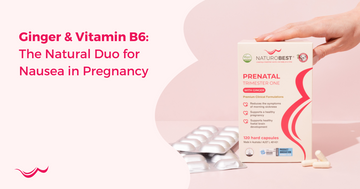
Prenatal Trimester One with Ginger is designed specifically for the first trimester. It includes Quatrefolic® active folate, active B vitamins and VitaCholine® choline to support healthy foetal brain development, with ginger and vitamin B6 to help relieve morning sickness. It's also iron-free, as iron can be harder to tolerate when nausea is common.
Because Prenatal Trimester One is iron-free, some women add iron if their healthcare provider recommends it. Iron & Brain Support provides iron as Ferrochel® iron bisglycinate alongside vitamin C, folate, vitamin B12 and VitaCholine® choline.
Supporting You Through Pregnancy
Explore Prenatal Trimester One with Ginger, designed specifically for the first trimester, and Iron & Brain Support for extra iron if your healthcare provider recommends it.